
"thermal reactive design"
15000 article(s) found
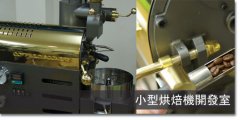
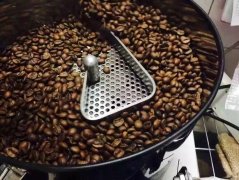
DISCOVERY small coffee roaster
Development of 200g small coffee roaster. Coffee has become a part of life. It has also become a very common habit to buy roasted coffee beans from stores and drink them at home. Recently, more and more people are buying their own coffee beans and baking them with hand nets and other ways. Nowadays, it is very easy to buy your favorite coffee, boutique coffee and other high-quality coffee.

The basic chemical reaction of coffee knowledge during coffee roasting.
Many thermal and chemical reactions take place during baking: decarbonation, dehydration of quinic acid, subdivision, isomerization, polymerization, and complex sugar reactions (caramelization). The main components of the thermal reaction are monosaccharides and sucrose, chlorogenic acid, free amino acids, and fenugreek amide. Both aravinose and calactose in the polysaccharides are transferred, and the basic vulcanization process includes hydroxylamine.

Chemical reaction and temperature during coffee roasting changes of reactive substances in coffee roasting process
Professional coffee knowledge exchange more coffee bean information please follow the coffee workshop (Wechat official account cafe_style) professional coffee roasting | coffee roasting is too complicated? A picture teaches you how the baking process reacts to the chemical composition of the baking. Sucrose: melting point 187.8 ℃-sugar? Complex = caramelization-water CO2 escapes to produce an explosive First Crack phenomenon. I'm in the roaster.

Basic chemical reactions that occur during coffee roasting
Many thermal and chemical reactions take place during baking: decarbonation, dehydration of quinic acid, fragmentation, isomerization, polymerization, and complex sugar reactions (caramelization). The main thermally reactive components are monosaccharides and sucrose, chlorogenic acid, displaced amino acids, and trigonelline amide. Both aravinone and calactose in polysaccharides are transferred, and basic sulfurization contains hydroxyamino acids.
Treatment of decaffeinated coffee beans
At present, there are three ways to remove caffeine from coffee beans:

How is decaf made?
At present, there are three ways to remove caffeine from coffee beans: 1. Water treatment can remove 9496% of the caffeine. 2. Chemical extraction method, early use chloroform (Chloroform), benzene (Benzene) as solvent to extract caffeine, later understand that these chemicals cause cancer, and gradually be replaced by other low-hazard chemicals, but after all, the chemical substances are not natural enough, this method can extract 96
Processing methods of low caffeine coffee beans
At present, there are three ways to remove caffeine from coffee beans: 1. Water treatment can remove 9496% of the caffeine. 2. Chemical extraction method, early use chloroform (Chloroform), benzene (Benzene) as solvent to extract caffeine, later understand that these chemicals cause cancer, and gradually be replaced by other low-hazard chemicals, but after all, the chemical substances are not natural enough, this method can extract 9.

Processing methods of coffee beans with low caffeine
CO2 low-caffeine treatment and other low-caffeine treatments are described as follows: at present, there are three ways to remove caffeine from coffee beans: 1. Water treatment can remove 9496% of the caffeine. 2. Chemical extraction method, early use of chloroform (Chloroform) and benzene (Benzene) as solvents to extract caffeine, and later understand that these chemicals cause cancer, and then gradually become other low-hazard chemicals.
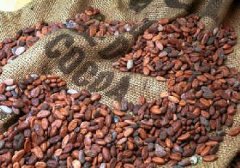
Decaffein, the processing method of low caffeine coffee beans
CO2 low-caffeine treatment and other low-caffeine treatments are described as follows: at present, there are three ways to remove caffeine from coffee beans: 1. Water treatment can remove 9496% of the caffeine. 2. Chemical extraction method, early use of chloroform (Chloroform) and benzene (Benzene) as solvents to extract caffeine, and later understand that these chemicals cause cancer, and then gradually become other low-hazard chemicals.
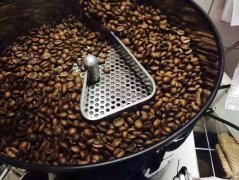
Decaffein, the processing method of low caffeine coffee beans
CO2 low-caffeine treatment and other low-caffeine treatments are described as follows: at present, there are three ways to remove caffeine from coffee beans: 1. Water treatment can remove 9496% of the caffeine. 2. Chemical extraction method, early use of chloroform (Chloroform) and benzene (Benzene) as solvents to extract caffeine, and later understand that these chemicals cause cancer, and then gradually become other low-hazard chemicals.

Limited edition thermal insulated coffee cup to keep the drink temperature
Designed jointly by well-known designers VernerPanton and PernilleVea, this Menu insulated coffee cup is very popular. Every time it launches new styling styles, that is, sold out and beautiful design, it also wins the recognition of the international design award. Embellished with the ingenuity of VernerPanton, the original classic thermal insulated coffee cup is dressed in a more gorgeous and modern style.
Decaf treatment? What is the carbon dioxide supercritical treatment of decaf coffee? Dioxin
Qianjie Coffee briefly describes the carbon dioxide supercritical treatment of decaf coffee the step of decaine treatment can only be carried out in the state of raw beans of sub-coffee. Today, there are three main types of treatments to remove caffeine: traditional / European treatment (European Process), Swiss water treatment (SWP,SwissWater Process), and carbon dioxide supercritical treatment (CO?

Limited edition thermal insulated coffee cup to keep the drink temperature
Designed jointly by well-known designers VernerPanton and PernilleVea, this Menu insulated coffee cup is very popular. Every time it launches new styling styles, that is, sold out and beautiful design, it also wins the recognition of the international design award. Embellished with the ingenuity of VernerPanton, the original classic thermal insulated coffee cup is dressed in a more gorgeous and modern style.

The basic Chemical reaction of Coffee Baking process
Original: Basic Chemical Reactions Occurring in the Roasting Process by Carl Staub sourced from the SCAA Roast Color Classification System developed by Agtron-SCAA in 1995 Many thermal and chemical reactions occur during the roasting proces
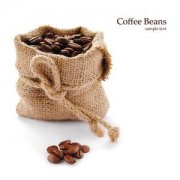
Basic chemical reactions in the roasting process of coffee in both Chinese and English
Original: Basic Chemical Reactions Occurring in the Roasting Process by Carl Staub sourced from the SCAA Roast Color Classification System developed by Agtron-SCAA in 1995 Many thermal and chemical reactions occur during the roasting proces
Explanation of the basic chemical reaction of coffee roasting in both Chinese and English
Original: Basic Chemical Reactions Occurring in the Roasting Process by Carl Staub sourced from the SCAA Roast Color Classification System developed by Agtron-SCAA in 1995 Many thermal and chemical reactions occur during the roasting proces

Coffee has the effect of inhibiting cancer.
The results show that people who drink more than one cup of coffee a day are 50% less likely to develop liver cancer than those who never drink coffee.

Coffee has the effect of suppressing cancer how to make good siphon coffee
The "chlorogenic acid" in coffee has the effect of removing "reactive oxygen species", which is the main cause of cancer. There is the same study on gastric cancer, and research by the Aichi Cancer Research Center in Japan shows that people who drink more than three cups of coffee a day are 50% less likely to develop stomach cancer than those who never drink coffee. The same study has been done on rectal cancer. People who drink more than three cups of coffee a day suffer from it.

Preheat a heat-sensitive coffee cup that changes its shape, a coffee cup of creative design.
This is the Heatswell thermal coffee cup brought by ScottAmron. The middle part of the cup (the blue part in the picture) is something similar to thermal paper. At room temperature, there is almost no difference between this cup and an ordinary paper cup in terms of thickness and weight, but once hot liquids, such as hot coffee, hot water, hot chocolate, are poured in, the blue part will be incredible in just 2 or 3 seconds.